


When people think about lifting operations, it’s often the crane that gets all the attention. However, at King Lifting we like to highlight all the important elements of the lift. This time we’re looking at the rigging that connects the load to the crane.
Without the right rigging equipment, even the most capable crane wouldn’t be able to lift a load safely or efficiently.
In this blog, we’ll explain what rigging is, the types of equipment commonly used and why it plays such an important role in lifting operations.
What is rigging?
Rigging refers to the equipment used to attach a load to a crane so it can be lifted, moved and positioned safely.
Depending on the load and the lifting operation, different types of rigging equipment may be required. The equipment selected will depend on factors such as the size, shape and weight of the load, as well as how it needs to be lifted.
Choosing the appropriate rigging equipment helps ensure the load remains secure throughout the lifting operation.
What equipment is used for rigging?
There are many different types of rigging equipment, each designed for specific lifting applications.
Some of the most commonly used items include:
- Slings
- Shackles
- Hooks
- Chains
- Lifting beams
- Spreader beams
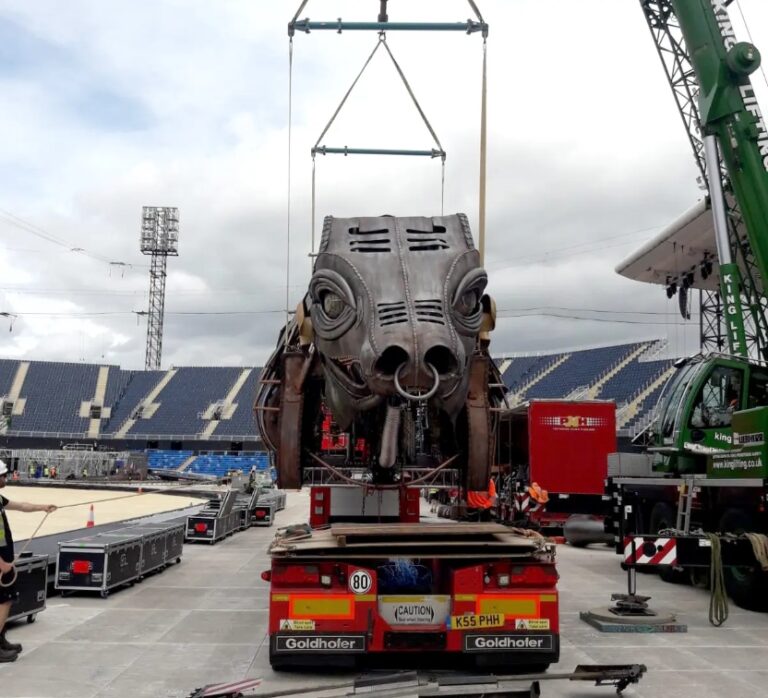
The equipment used will vary depending on the lifting requirements, with each component working together to help support a safe and controlled lift. For example; when lifting The Bull for the Commonwealth Games a spreader bar was used, whereas removing a tunnel boring machine from a National Grid London power tunnel shaft at its Wimbledon site used a sling.
Why is rigging important?
Rigging provides the connection between the crane and the load. Using suitable rigging equipment helps ensure the load is supported correctly throughout the lift, reducing unnecessary movement and allowing it to be positioned accurately. Selecting the appropriate rigging arrangement also helps distribute the weight of the load effectively, supporting a safe and efficient lifting operation.
More than just lifting equipment
Using rigging equipment safely requires the right knowledge, training and experience. King Lifting can support your team in understanding how to inspect, select and secure the appropriate equipment through our training courses.
For those working in hands-on lifting roles, qualifications such as the CPCS A40 Slinger Signaller and NOCN Enhanced Slinger Signaller provide the practical skills needed to inspect lifting accessories, choose suitable slings and shackles, and attach loads safely before lifting begins.
For those progressing into supervisory and planning roles, courses including the CPCS A62 Crane/Lifting Operations Supervisor and CPCS A61 Appointed Person develop a broader understanding of lifting operations. These qualifications focus on planning, coordinating and overseeing lifts, including specifying the appropriate lifting equipment within a lift plan.
Whether selecting rigging equipment on site or planning complex lifting operations, our training helps ensure lifting teams have the knowledge and confidence to carry out their roles safely and effectively.