


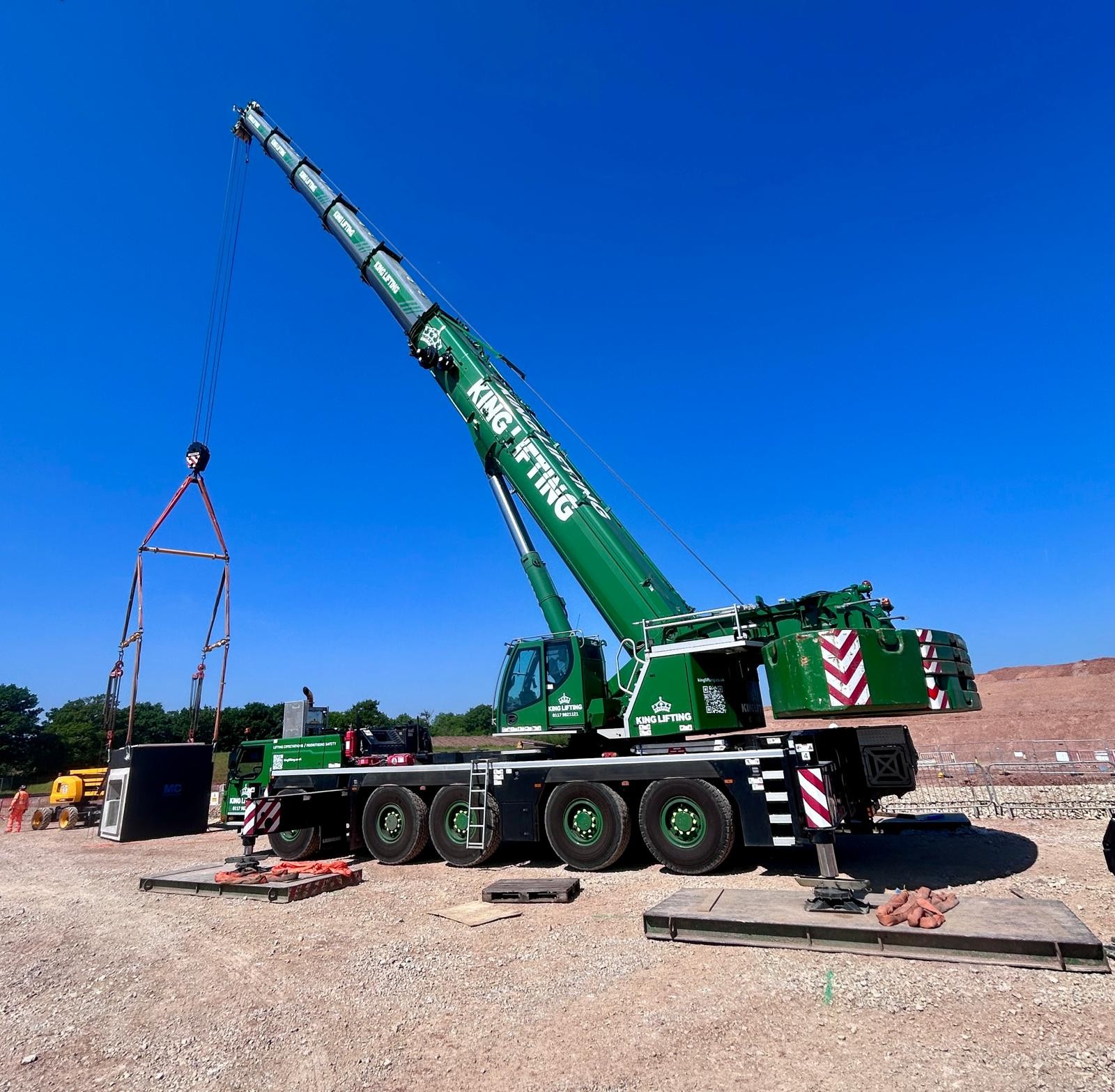
A successful lift isn’t just the moment the load leaves the ground. It’s the full process, from when the project is first planned to when we set down to a final position.
Recent projects across Europe, including work in Madrid and Frankfurt, show how many moving parts are involved in getting that right.
It starts with planning
Understanding the load, the site conditions and the right crane for the job. That includes looking at access, ground bearing pressures and how the lift will actually be carried out, not just in theory, but in practice on site.
Next comes delivery and offloading
This stage is often overlooked, but it can be one of the trickier parts of the job. Loads don’t always arrive in ideal conditions, and space to offload can be tight. We’ve seen this across a number of projects, from data centres to infrastructure work, where careful positioning from the outset makes the rest of the lift possible.
Then it gets specific
From there, the lift itself can take a number of forms. On some jobs, it’s a straightforward single-crane lift. On others, it might involve tandem lifting, staged installs or working within restricted spaces. As well as complex installs that require slightly different approaches depending on the environment.
Up in the air
Once the load is in the air, the focus shifts to control. Moving it safely, avoiding clashes, and guiding it into position without rushing. This is often where experience shows, especially on jobs where there’s very little room to manoeuvre.
Final positioning
The end placement is just as important as the lift itself. Whether it’s a generator, pipework or switchgear, it needs to be placed accurately so other work can continue without delay. On projects like tunnel boring machine lifts or large infrastructure installs, this stage can take as much care as the initial lift.
All in a day’s lift
Across all of these stages, communication is key. The lift team, operators and site teams all need to stay aligned so each step happens at the right time. If one part is delayed, it can affect everything that follows.
When everything comes together, the lift can look simple from the outside. In reality, it’s the result of careful planning, steady execution and a team that understands how each stage fits into the bigger picture.