


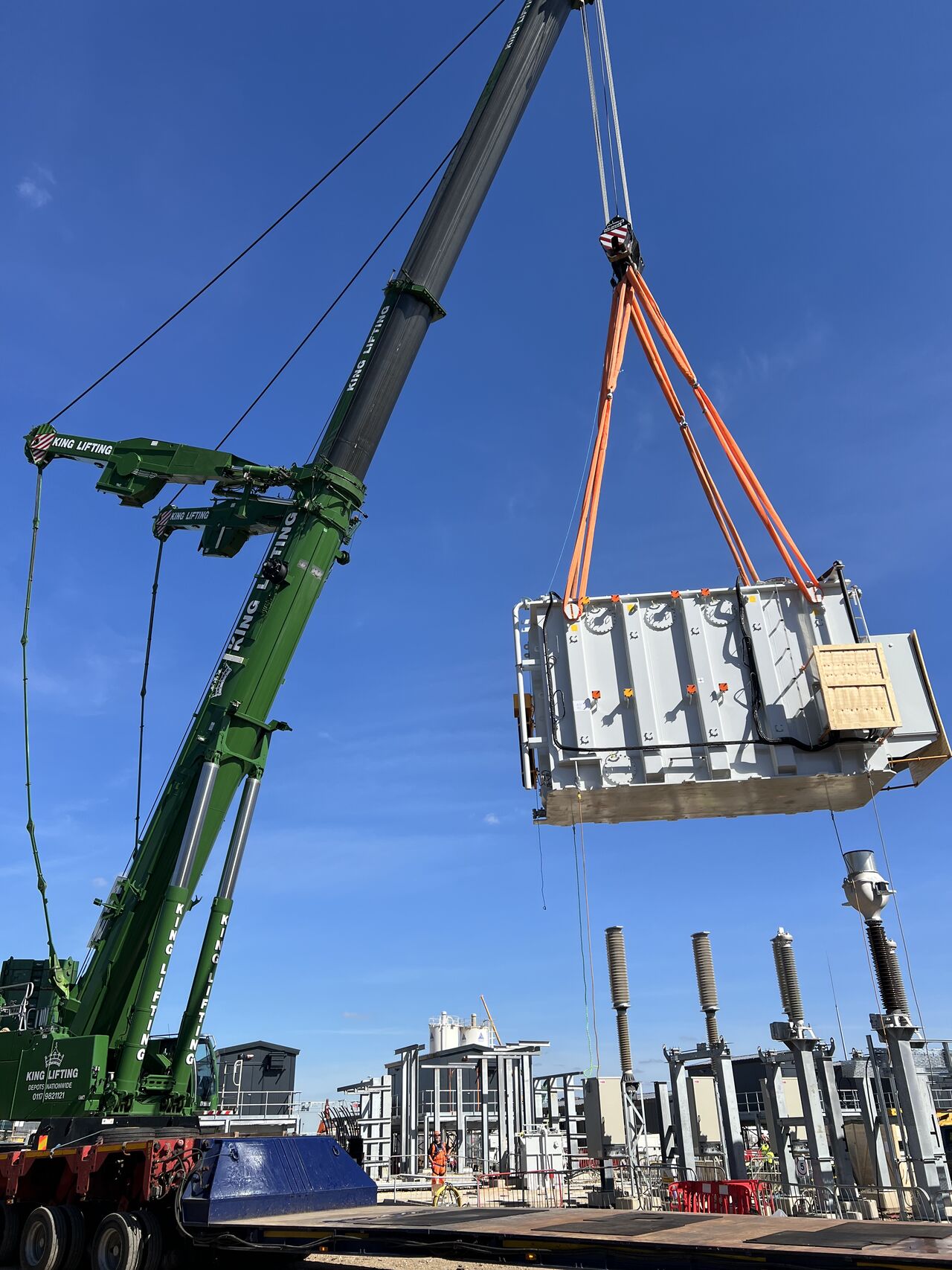
Data centres are some of the more demanding environments we work in. Tight spaces, sensitive equipment and often live infrastructure mean there’s very little room for error.
In Madrid, our team worked on positioning 55-tonne generators, CRAH units, fan walls, batteries and switchgear; all key parts of keeping the site up and running. Each lift had to be carefully planned and carried out with precision to avoid disruption.
We’ve seen similar challenges across other data centre projects too, particularly in the Netherlands and Germany. While every site is different, the same issues come up time and again; restricted access, limited headroom and the need to work around ongoing operations. It’s not unusual for lifts to be carried out in phases, or during tight time windows, to fit around the rest of the build.
Because of that, most of the work happens before we even get to site.
We spend time mapping out crane positions, lift paths and clearances, making sure everything has been thought through in advance.
On site, the focus is on getting set up properly and taking the lift step by step. There’s no rushing it. The team works through the plan, keeps communication clear, and makes sure everything is done safely.
These projects are a good example of how planning and experience come together. It’s not just about lifting heavy equipment, it’s about doing it in places where space is tight and the stakes are higher.
The end result in Madrid, and across similar projects, was a smooth install with no issues or delays. Most of that success comes down to the work put in beforehand.